Kilchoan Estate Dunton Scotland luxury as a new kind of country retreat
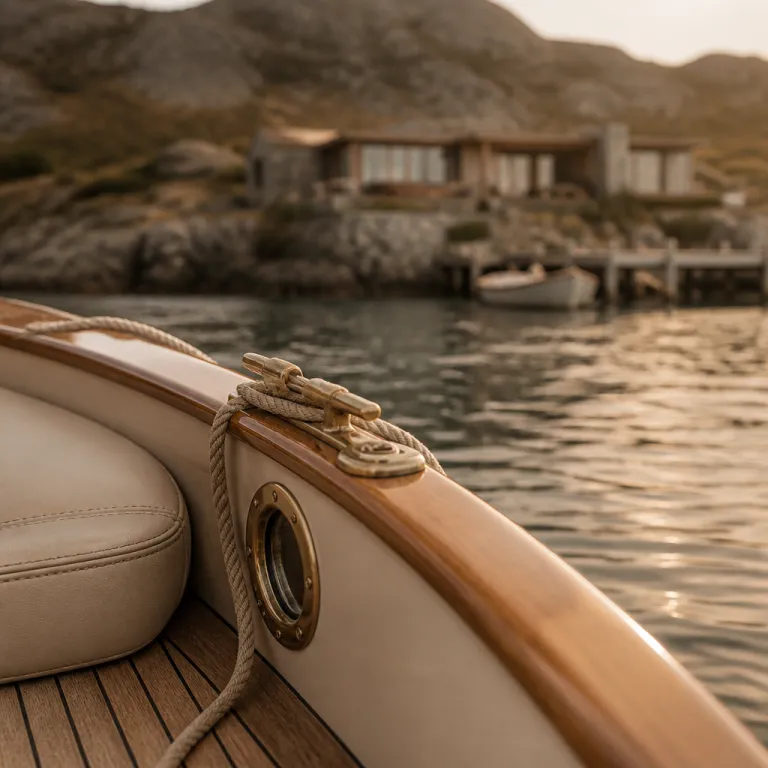
Kilchoan Estate on Knoydart in the Scottish Highlands signals a decisive shift toward remote-first villa hospitality. Set on a roughly 13,000-acre private estate between Loch Nevis and Loch Hourn, this Scottish country retreat is accessible only by boat from Mallaig or via an 18-mile (around 29-kilometre) hike on foot, a distance widely cited in local walking guides and Knoydart access notes. For villa guests used to key handover in a Mediterranean marina, this Highland hideaway demands effort before it offers ease.
The estate is operated by Dunton Destinations, the Colorado-based hospitality brand behind Dunton Hot Springs, and Kilchoan is its first European property. Where the original Dunton Hot Springs resort turned a former mining town into a low-volume hideaway, the new Scottish estate translates that same philosophy into a landscape of loch, moor and mountain. Instead of a drive-up resort, this Dunton Scotland outpost treats the journey by water as part of the stay rather than a logistical hurdle, a point underlined in Dunton Destinations’ own launch materials.
Five restored stone and timber cottages, each with two to five bedrooms, form the core of the Kilchoan accommodation. Designed by London-based studio Waldo Works, the cottages and the communal Long House balance Scottish Highlands vernacular with quietly polished interiors that feel more private villa than traditional country-house hotel. Textiles from British and Irish makers, including Bute, Mourne Textiles and Isle Mill, soften the long views across Loch Nevis and anchor the estate in a wider craft community that Dunton has highlighted in its design brief.
Indicative rates start from around GBP 1,100 per night for two guests, including meals, beverages and ferry transfers, which positions Kilchoan firmly in the upper tier of European villa-style retreats. These guide prices are drawn from early Dunton Destinations rate sheets and may shift with season and demand. For solo explorers or small groups, the cottages function as self-contained houses with the service depth of a fully staffed estate, rather than anonymous rental properties, a hybrid model that combines private-villa seclusion with the infrastructure of a small lodge.
The Long House acts as the social and culinary heart of the estate, with communal dining that feels more like an invitation to a private Scottish house party than a restaurant booking. The kitchen is led by chef Jamie Smart, whose ingredient-focused menus lean into local seafood, wild game and foraged produce from the surrounding Highlands, so dishes track the seasons rather than a fixed hotel template. A compact spa with sauna and yoga studio completes the core offer, giving villa guests a way to warm up after a wet boat crossing or a long stalk on the hill.
Operationally, this is not an easy estate to run, and that difficulty is part of the story. Every bottle, textile and ingredient must arrive by water, and the team relies on partners such as Western Isles Cruises, named in Kilchoan’s own access notes, to keep the flow of guests and supplies steady across Loch Nevis. For travellers who care about conservation-led hospitality, that logistical complexity underlines why a remote Scottish Highlands estate will never be a volume play and why the Kilchoan model prioritises low-impact, low-density stays over rapid expansion, with stated ambitions to reduce fossil-fuel use, tighten waste management and favour local supply chains where possible.
From Dunton Hot Springs to Knoydart: wilderness luxury for villa travellers
Dunton Destinations built its reputation with Dunton Hot Springs in Colorado, where a handful of cabins and a restored long-house-style saloon reframed wilderness as a luxury asset. At Kilchoan, the same Dunton Hot Springs DNA appears in the way the estate treats the surrounding landscape as the primary amenity, not a backdrop. Red deer on the ridgeline, golden eagles overhead and otters and seals in the loch become part of the daily rhythm for guests, not occasional wildlife bonuses.
The Knoydart Peninsula has long been a byword for remoteness in Scotland, and the Knoydart Foundation has worked for years to balance community needs with conservation. Kilchoan Estate sits within that context, and the project will be watched closely as a test of whether high-end hospitality can support, rather than distort, a fragile local community of around 120 people in nearby Inverie. As one Knoydart Foundation trustee put it in a recent community meeting, the goal is “welcoming visitors who understand they are stepping into a living place, not a theme park”, a sentiment that frames how villa travellers might think about their stay.
Design is where the London-based Waldo Works studio, and its sister practice Studio Waldo, make the Dunton vision legible to a European villa audience. The cottages read as individual houses, with stone walls, timber beams and deep sofas that feel made for long Scottish evenings when the weather closes in over the loch. Inside the Long House, shared tables and a bar encourage guests to treat the estate as a private club in the wilderness rather than a series of isolated rentals, with staff on hand to share local stories and practical advice on walks, wildlife and weather.
Ownership matters in this story, and here the names behind the project are explicit. Kilchoan Estate is owned by Katrin and Christoph Henkel, and the couple’s track record with Dunton Destinations in the United States gives this new Scottish venture immediate credibility with serious luxury travel planners. For villa bookers, that continuity of ownership and vision reduces the risk that a remote Highlands property will feel like an under-resourced experiment rather than a fully resolved retreat, and it also makes it easier to hold the operators to their own sustainability and community-engagement commitments.
Energy and access are the two pressure points for any remote country house or villa estate, and Kilchoan is no exception. The estate will need to show how it can move steadily toward more fuel-free operations and reduced fossil-fuel dependency without compromising the comfort level that guests paying four-figure nightly rates expect. Early statements from the team reference a gradual shift toward lower-emission boats, more on-site renewable energy and tighter sourcing from nearby producers, echoing debates already live across high-end villas in rural Italy, from the Siena farmhouse elegance of Tuscan villa stays to more experimental agriturismo projects, and readers can compare approaches in our guide to refined Tuscan villa stays.
For solo explorers used to booking a villa in the Mediterranean, the Kilchoan model will feel both familiar and radically different. You still secure a private house or one of several cottages, but you share a Long House for dining and lean into a hosted experience that is closer to staying with friends who own a Scottish estate than renting a standalone property. That hybrid format is likely to appeal to travellers who want the privacy of a villa but also value the social texture and local knowledge that come with a small, tightly run hospitality operation rooted in a specific Highlands community.
What Kilchoan means for the future of remote luxury villas
Kilchoan Estate on Knoydart arrives at a moment when remote retreats are moving from niche curiosity to core part of the villa conversation. Eco-friendly tourism, conservation-focused travel and a growing appetite for places that require genuine effort to reach are reshaping what a high-end estate will look like in the next decade. For villa travellers who have already cycled through the easier pleasures of the Mediterranean villa corridors, the pull of a Scottish Highlands peninsula with no road access is strong.
In practical terms, reaching Kilchoan means booking the ferry in advance, parking your car in Mallaig and accepting that the last leg of your journey will be by water or on foot. The estate works with Western Isles Cruises to manage boat access, and the team advises guests to pack for variable weather and to think in layers rather than outfits. Local residents in Inverie often stress the same point to first-time visitors: plan for delays, assume the forecast will change and treat the crossing of Loch Nevis as part of the experience rather than an obstacle.
Once in residence, the rhythm of a stay at Kilchoan Estate is closer to a guided wilderness immersion than a standard villa week. Days might start with yoga in the Long House studio, move into guided hiking or stalking in the surrounding Highlands and end with a long dinner that tracks what the chef and the estate team have sourced from sea and hill. Fishing during the peak season, especially when the rivers and lochs are in good condition, adds another layer for guests who want their luxury travel to include time on the water rather than only views of it.
For villa bookers weighing Kilchoan against a classic Mediterranean rental, the trade-off is clear. A house on the Knoydart Peninsula offers deep quiet, a tight-knit community context and a landscape that feels almost pre-industrial, but it will not deliver the easy restaurant hopping and beach-club circuit of Greece, Turkey or Croatia, which we analyse in our guide to the Mediterranean villa corridors worth watching. Kilchoan is for travellers who prefer a long conversation by the fire in a Scottish country house to a late-night bar on a crowded island.
Looking beyond Scotland, the Kilchoan model aligns with a broader shift toward remote estates in places as varied as the Australian bush and the Patagonian steppe. Our report on luxury Australian retreats for foodies and nature lovers shows how similar principles of low-density, high-touch hospitality are playing out in another hemisphere. For solo explorers, that means the villa map is expanding away from coasts and toward interior landscapes where the view belongs to you alone and the nearest neighbour might be a herd of red deer rather than another pool.
The opening of Kilchoan Estate on the Knoydart Peninsula is also a test of how far guests are willing to go, literally, for a different kind of luxury. As one internal briefing from the operators puts it plainly, “How do I reach Kilchoan Estate?” and the answer is equally direct: “By boat from Mallaig or an 18-mile hike.” For villa travellers who read that and feel a spark of curiosity rather than concern, this Dunton Scotland retreat may be less a once-in-a-lifetime trip and more the start of a new personal map of remote, effortful, deeply rewarding stays.