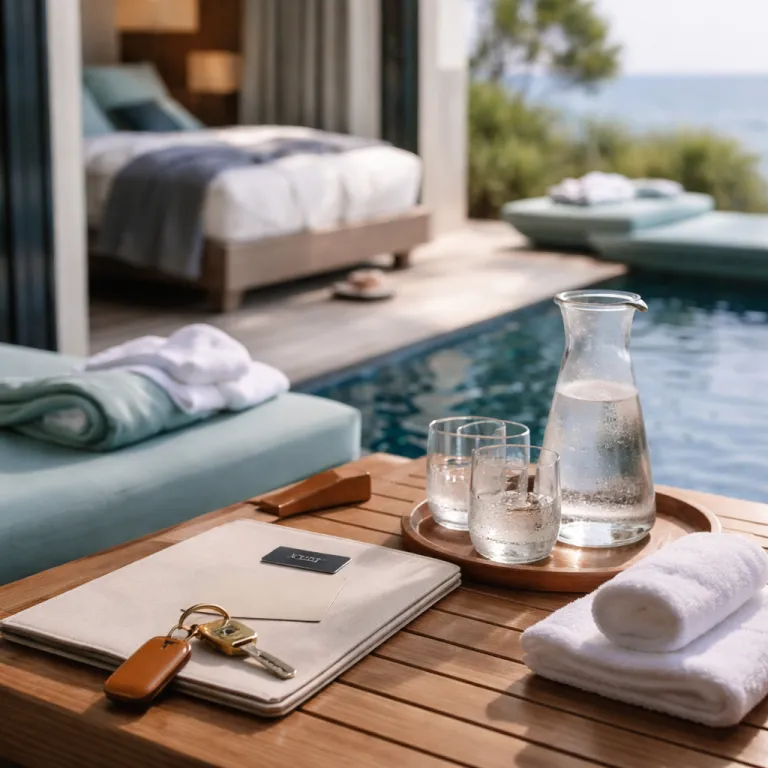
Why branded residences now rival the classic private villa
Across the global luxury property market, branded residences have shifted from niche experiment to serious rival for traditional villa rentals. According to Savills’ 2023 Branded Residences Spotlight, the number of branded residential projects worldwide rose from roughly 400 schemes in 2012 to more than 900 by 2022, with the Americas and Asia-Pacific leading the expansion and Miami, Los Angeles, and other gateway cities emerging as key hubs. Sector analysts now track this residences segment as closely as prime real estate in Beverly Hills or the hills above Los Angeles. For business-leisure travelers used to high service standards, this new branded residential category offers villa-scale living with hotel-branded service guarantees, professional development oversight, and a clearer sense of long-term value.
The typical buyer or long-term user of a branded residence is a globally mobile executive who wants luxury living without the operational headaches of independent private residences. They are comparing ultra-luxury residences in Southern California, branded real estate in South Florida, and new residences Miami developments in districts such as Brickell and Wynwood with classic villas in California wine country or the high hills above Los Angeles. For them, the appeal lies in consistent hotel-level staffing, a design specialist on every project, and a brand that protects resale value in the wider real estate market by enforcing maintenance standards and coherent design.
Major hotel groups now treat branded residences as a core development pillar rather than an add-on. Marriott International, Hilton Worldwide, InterContinental Hotels Group, and Hyatt Hotels Corporation are all expanding luxury residential portfolios, often pairing high-rise luxury condos with larger villa-style residence formats. Their projects integrate wellness programs, AI-driven services such as predictive maintenance, smart-home personalization, and automated concierge platforms, and community-focused design, so the line between a hotel-branded resort and a stand-alone residence becomes deliberately blurred for high-net-worth guests who may first rent, then buy. As one senior developer behind a recent Los Angeles launch explains, “Our buyers want the emotional comfort of a villa with the operational backbone of a five-star hotel brand.”
From Miami to Southern California: how villa guests actually use branded residences
For villa travelers, the most interesting shift in branded residences is how these properties are being used in real life. In Miami, residential complexes such as new residences Miami schemes in South Florida pair sky-high luxury condos with a limited collection of villa-scale private residences, giving guests the choice between vertical living and garden-level seclusion. In California, the focus is on low-rise branded residence enclaves in Southern California and the hills around Los Angeles, where the residence layout feels closer to a classic villa than a tower apartment and where outdoor space is treated as an extension of the living room.
On villa booking platforms, the same executive who once filtered only for independent villas in Beverly Hills now weighs a branded residence by Mandarin Oriental or another hotel-branded name against a free-standing estate. They compare the privacy of a Wailea-style beachfront villa in Maui, as profiled in this guide to luxury beachfront living and premium vacation rentals, with the security and services of a branded residences compound in Los Angeles or Miami. The decision often comes down to whether they value total autonomy or the reassurance of a brand that can arrange a chef, a yacht, or a boardroom at short notice, with clear service-level agreements and 24/7 support.
For renters, the rise of branded residential living means more choice in how they structure a stay that blends work and leisure. Some use a branded residence as a long-term base in the real estate hubs of Los Angeles or Miami, then add short villa-style escapes in quieter hills nearby. Others book a hotel-branded residence for a week, then extend into a neighboring independent villa once they have oriented themselves, using the brand’s concierge as an on-the-ground specialist for local dining, wellness, and design-led experiences. At the St. Regis Residences in Miami, for example, early buyers have paid reported prices starting around $3 million for branded apartments while also renting villa-scale residences for seasonal stays, effectively testing the lifestyle before committing to full ownership and using real price points to benchmark value against independent villas.
Investment, risk, and what villa guests should watch next
Behind the lifestyle story, the branded residences boom is also an investment narrative that matters to serious villa travelers. Developers point to data showing that branded residences can command price premiums and stronger resale performance than comparable unbranded real estate, especially in constrained luxury market locations such as Beverly Hills or prime South Florida waterfronts, with some Savills case studies citing resale uplifts of 20–30 percent over similar non-branded stock. As one industry explainer puts it, “What are branded residences? Luxury homes associated with hotel brands offering exclusive services.”
For villa guests, this investment logic translates into better maintained properties and more consistent service standards. A branded residence backed by a global brand has an incentive to keep every residence in top condition, because any lapse affects the wider real estate portfolio and the hotel-branded reputation. That is why new launches from Bulgari, Aman, Four Seasons, and Mandarin Oriental often pair ultra-luxury villas with branded residences, giving owners and renters access to the same wellness integration, AI-enabled services, and curated community living that high-net-worth travelers now expect, while also signaling that the brand has long-term capital at stake in the destination.
There is a risk side to this boom, especially when brand names stretch too far into residential development and dilute their promise of luxury living. Some projects lean heavily on the brand while delivering only standard residential finishes, which seasoned villa travelers quickly notice when comparing them with independent estates or the kind of carefully vetted villas highlighted in this analysis of why wealthy travelers now choose villas over hotels. As new hotel-branded private residences emerge from Miami to California, and as destinations from South Florida to the high hills of Southern California add villa-like compounds, executives planning intimate events will also see crossovers with curated venues such as the best adults only resorts for intimate destination weddings in Mexico, where the line between residence, villa, and resort continues to narrow and where the practical choice for villa guests is whether they prioritize independent character or the predictability of a global brand.