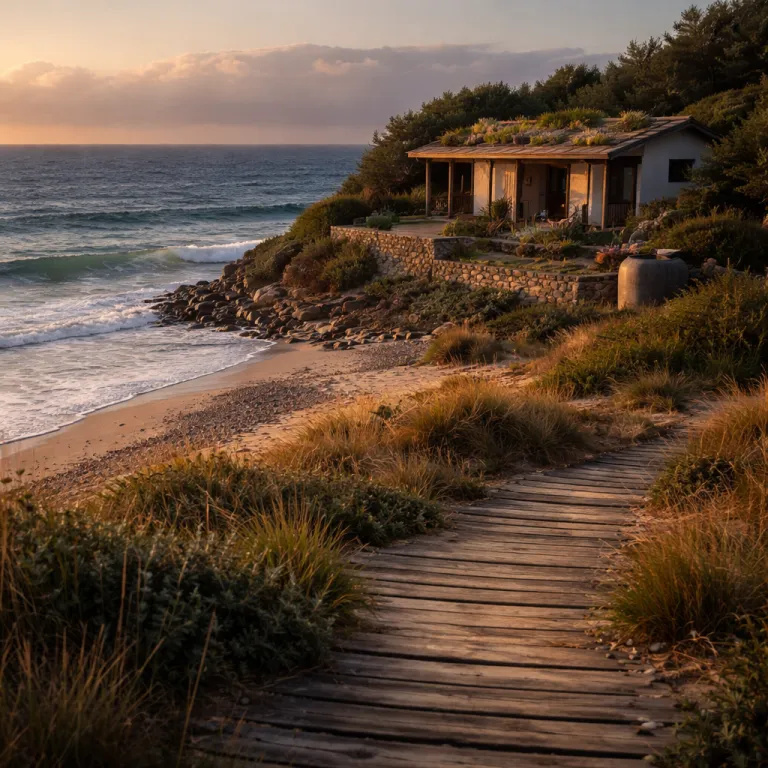
The shift from less harmful stays to genuinely regenerative luxury villas
Most so called sustainable villas still sit in the comfort zone of doing less harm. A few pioneering properties are quietly redefining luxury by making every stay actively regenerative for the land, the water systems and the local community that host you. For a solo explorer choosing between luxury villas, this is the real line in the sand.
Think of the spectrum as three clear tiers of tourism practice. At one end, conventional luxury tourism externalizes its costs, importing food, staff and design while exporting waste, carbon and pressure on fragile natural systems. In the middle, sustainable travel trims the damage with eco friendly gestures such as LED lighting, low flow taps and recycled material finishes, but rarely changes the underlying architecture of hospitality.
The far end of the spectrum is where regenerative tourism luxury villas now operate. Here, every property is designed as infrastructure for restoration, from renewable energy microgrids to intelligent water systems that recharge aquifers instead of draining them. This is regenerative tourism in its purest form, where luxury sustainability is measured by how much healthier the place becomes after you leave.
Operators like Solaire Beach Villas in Anguilla and Montemar Eco Luxury Villas in the Galápagos show how this works in practice. Their eco luxury approach uses local material, on site solar systems and organic gardens to turn each villa into a small scale regenerative travel lab. At Montemar, for instance, the owners report in their internal monitoring that more than 70 % of their electricity now comes from photovoltaic panels and that their on site farm supplies a majority of fresh produce in season, reducing food miles and waste. The result is a style of eco tourism where luxury regenerative design feels effortless, but the environmental intelligence behind it is anything but casual.
Data from heritage.villas, compiled from a 2023 survey of more than 2,000 international travelers, shows that travelers wanting sustainable travel already represent a clear majority. Their research reports that “Travelers wanting sustainable travel” reach 76 %, “Willingness to pay more for sustainability” reaches 79 %, and “Prioritizing sustainability in travel decisions” reaches 83 %. Those numbers align with similar findings from global hospitality trend reports and explain why the market for regenerative luxury villas is no longer a niche experiment but a serious hospitality strategy.
For a premium booking platform, the implication is blunt. Listing any random eco conscious property with a few solar panels is no longer enough when the luxury market is shifting toward verifiable regenerative tourism. The platforms that will win are those that can interrogate design, systems and long term impact with the same rigor they apply to service standards and architecture photography, using third party certifications, energy and water performance data and biodiversity monitoring as part of their due diligence.
As a guest, you should now read villa descriptions with a sharper lens. Ask whether the luxury villas you are considering contribute to reforestation, coral restoration or local community training, or whether they simply offset emissions through distant schemes. The difference between sustainable and regenerative travel is the difference between paying for less damage and investing in a better future for the place you are borrowing.
From offsets to restoration: what regenerative architecture looks like on the ground
Carbon offsets have become the theater of modern travel guilt. Regenerative tourism luxury villas cut through that performance by embedding restoration into the architecture, the landscape and the daily operations of each property. When done well, the eco systems around a villa are measurably richer five or ten years after opening, with indicators such as increased native species counts, higher soil organic matter and reduced freshwater extraction per guest night.
Start with the bones of the building, because architecture is destiny in hospitality. Regenerative luxury design uses local material such as stone, timber and lime plasters, combined with passive cooling intelligence that reduces the need for mechanical air conditioning. Rooflines, shading and orientation are tuned to natural breezes, while thick walls and deep verandas keep interiors cool without fighting the climate.
Water is the second frontier where luxury sustainability becomes visible. Advanced water systems capture rain, recycle greywater for landscaping and use constructed wetlands to filter wastewater before it reenters the ground. The best villas now operate with almost zero discharge, echoing the Ananda model of recycling water for landscaping and closing the loop between guest comfort and watershed health. In practice, this can mean cutting mains water use by 40–60 % compared with conventional resorts, according to case studies shared by eco engineering consultancies and internal property reports.
Energy is where many eco friendly claims begin and end, but regenerative tourism demands more. Solar arrays, battery storage and sometimes small wind systems allow villas to run on renewable energy while stabilizing local grids rather than stressing them. When a property exports clean power back into the local community, luxury regenerative travel stops being a private indulgence and becomes a shared asset, with some coastal villas now reporting through their sustainability disclosures that 20–30 % of their annual generation supports nearby homes and services during peak demand.
Look at projects like Candela Tulum in Mexico, where regenerative luxury residences are planned around restored jungle corridors and native species habitats. Here, eco luxury is not a marketing adjective but a design brief that shapes every path, pool and pavilion. The villas become part of a living system, not isolated objects dropped into a fragile place, and early ecological monitoring has recorded the return of bird and insect species that had not been seen on the site for years before construction.
Marine destinations are pushing this further with coral reef restoration partnerships. Along the Red Sea coast of Saudi Arabia, high end real estate developments are experimenting with underwater nurseries that guests can visit between dives, turning luxury tourism into hands on conservation. In these villas, the line between eco tourism and marine science blurs, and your stay funds the very reef that frames your infinity pool, with operators tracking metrics such as the number of coral fragments outplanted, survival rates after twelve months and changes in local fish diversity.
If you want to go deeper into how five star privacy meets serious sustainability, read the analysis on the rise of the eco luxe villa on villa stay, which dissects when sustainability genuinely meets high end comfort and highlights properties that publish verified performance data. That kind of editorial scrutiny is what the global market now needs, because glossy sustainability pages without hard data on systems, material and long term impact are no longer credible. For solo travelers who care about both design and ethics, this is the new due diligence.
The guest’s role in regenerative travel: from passive consumer to active co steward
Regenerative tourism luxury villas only work when guests step beyond passive consumption. The architecture, the renewable energy systems and the eco friendly landscaping set the stage, but your behavior determines whether the performance is regenerative or merely less harmful. Solo travelers are often the quickest to adapt, because they can align their own rhythm with the place more easily.
At Montemar Eco Luxury Villas in the Galápagos, for example, guests are invited into the property’s tortoise conservation work and organic farming routines. You are not forced into activities, yet the hospitality team makes it effortless to join morning habitat walks, compost workshops or data collection sessions that feed into local conservation intelligence. Over time, this kind of participation has helped the team track tortoise movements across the estate and refine grazing patterns, illustrating how guest engagement can generate useful biodiversity data. This is regenerative travel as participation, not as a surcharge on your invoice.
In Costa Rica, a country that has become shorthand for sustainable travel, the best luxury villas now build entire guest journeys around local community engagement. You might spend one day with a reforestation crew planting native trees along a river corridor, then return to an eco luxury villa where the pool is fed by gravity and the water systems are powered by micro hydro turbines. The contrast between muddy boots and polished concrete floors is precisely what makes the experience feel both grounded and indulgent.
Economic regeneration matters as much as ecological repair. When a property sources food, spa products and guiding services from the immediate local community, every night you book becomes a micro investment in regional resilience. This is where regenerative luxury diverges sharply from the traditional luxury hotel model, which often centralizes procurement and drains value away from the villages that surround it. Some villa operators now publish annual impact statements that quantify local spend, number of small suppliers supported and hours of paid training delivered to nearby residents.
For solo explorers using a premium booking website, the filters you apply send a clear signal to the market. Prioritize villas that publish data on energy, water and waste, that name their local partners and that explain how their real estate financing aligns with long term conservation goals. When enough guests choose eco conscious properties with transparent sustainability reporting, the global hospitality market has no choice but to follow.
Platforms like villa stay have started to curate luxury eco villas where sustainable elegance is non negotiable, not a decorative extra. Their guides to booking luxury eco villas with serious sustainability standards help you separate regenerative tourism from greenwashed marketing copy. Use those resources as a baseline, then push further by asking each property for specifics on material sourcing, biodiversity plans and community contracts, and by requesting any third party audits or certifications that verify their claims.
Remember that regenerative tourism luxury villas are not sanctuaries from reality ; they are prototypes for a different way of living. Your stay is a rehearsal for a lifestyle where comfort, eco tourism and responsibility are not in conflict but in conversation. The more you lean into that experiment, the more value you extract from every kilometer of travel you choose to make.
Why high end villas are uniquely positioned to lead regenerative tourism
Mass tourism will not lead the regenerative transition, because its margins are too thin. Regenerative tourism luxury villas, by contrast, operate in a price band where serious investment in sustainability systems is both possible and expected. That financial headroom is precisely why the villa segment has become the test lab for the next era of eco tourism.
Consider the capital stack behind a coastal property in the Red Sea region of Saudi Arabia or a jungle retreat in Costa Rica. These are real estate plays as much as hospitality ventures, and their investors increasingly understand that long term asset value depends on ecological stability. Mangrove restoration, dune protection and native forest buffers are no longer philanthropic extras ; they are risk management tools that protect both the villas and the shoreline, and they are increasingly backed by baseline ecological surveys and periodic monitoring reports.
High end guests are also more willing to pay for luxury regenerative experiences that feel both rare and responsible. When 79 % of travelers say they will pay more for sustainability, the premium segment is where that willingness can translate into real budgets for renewable energy, advanced water systems and sophisticated waste treatment. In this context, eco luxury is not a soft value but a hard differentiator in a crowded global market, and properties that can show verified reductions in emissions or water use per guest night are already using those metrics in their positioning.
Booking platforms have a strategic role to play here. A site like villa stay, with its seasonal intelligence on the properties, destinations and dates that matter, can steer demand toward villas that treat sustainability as core infrastructure rather than as a marketing story. By foregrounding regenerative tourism metrics alongside pool size and bedroom count, a platform can quietly reset what luxury means for the next generation of travelers.
There is also a cultural advantage that villas hold over the traditional luxury hotel model. A villa is, by definition, a place where privacy, autonomy and local immersion are easier to engineer, from on site gardens to direct relationships with nearby farmers and guides. That intimacy with the surrounding natural and human systems makes it far easier to design regenerative loops that guests can see, feel and support, from composting stations to visible wildlife corridors and community co managed trails.
For you as a solo explorer, this is not an abstract industry debate. The choice between a conventional luxury property and a regenerative tourism villa is a choice about what kind of future your travel money builds. When you select a property that runs on renewable energy, restores habitats and anchors the local community economy, you are effectively voting for a different architecture of global tourism.
The next wave of villa openings will make this choice even starker. Expect to see more properties where every element of design, from material palettes to landscape plans, is justified in terms of measurable sustainability outcomes. Those are the villas worth crossing an ocean for, because they prove that indulgence and responsibility can share the same horizon line without compromise.
Key figures shaping regenerative tourism luxury villas
- Heritage.villas reports that 76 % of travelers now actively want sustainable travel options, confirming that demand for eco conscious luxury villas is no longer a niche preference but a mainstream expectation. Their 2023 survey methodology, based on responses from more than 2,000 guests across Europe, North America and the Middle East, gives these figures additional weight.
- The same heritage.villas data shows that 79 % of guests are willing to pay more for sustainability, which gives regenerative tourism properties the pricing power needed to invest in renewable energy, advanced water systems and long term conservation programs. In practice, this can translate into capital budgets for solar arrays, battery storage and on site treatment plants that would be difficult to justify in lower priced segments.
- According to heritage.villas, 83 % of travelers prioritize sustainability in their travel decisions, suggesting that transparency about architecture, material sourcing and local community impact will increasingly influence booking choices for high end villas. Properties that publish annual impact reports and third party verified performance data are therefore likely to gain a competitive edge.
- Operators such as Solaire Beach Villas and Montemar Eco Luxury Villas demonstrate that integrating eco friendly systems like solar panels, rainwater harvesting and organic gardens can reduce operational footprints while enhancing guest experience, strengthening the business case for regenerative luxury. Internal monitoring at comparable properties indicates that such measures can cut grid electricity use by more than half and reduce waste sent to landfill by up to 60 %.
- Projects like Candela Tulum illustrate how regenerative real estate strategies that protect natural habitats and support local economies can increase the long term value of both the property and the surrounding destination, aligning investor interests with sustainability outcomes. Early project documentation highlights commitments to preserve significant portions of existing vegetation, restore wildlife corridors and prioritize local employment during both construction and operations.