Indoor outdoor luxury villa design: how retractable glass walls changed the game
Summary checklist for renters
- Look for full-height retractable glass walls, not just oversized windows
- Continuous indoor–outdoor flooring and minimal level changes at thresholds
- Typical high-end systems: U-values around 1.0–1.5 W/m²K and ~40–45 dB sound reduction
- Motorised or sensor-based closure for sudden wind or rain
- Layered outdoor zones (dining, lounge, pool) all visible from the main living room
From picture window to disappearing wall in luxury villa design
Indoor outdoor luxury villa design has moved from aspiration to baseline expectation for serious travelers. The most coveted luxury villa now treats the boundary between indoor space and outdoor spaces as a flexible line, not a fixed wall, which changes how every room feels and how families actually use the property. Architects, homeowners, and manufacturers have spent the past two decades refining retractable glass walls so that a modern luxury villa can open completely to the landscape without sacrificing comfort, privacy, or safety.
The shift began when architects started specifying full height glass walls instead of traditional windows in new villas. Industry data from manufacturers such as NanaWall and Reynaers Aluminium points to triple digit growth in retractable glass wall installations between the early 2000s and the mid‑2010s, and that acceleration tracks directly with rising demand for open living and natural light in high end villas worldwide.1 This architectural innovation was driven by a clear context; affluent homeowners wanted flexible living spaces that could create a stronger connection with nature, while also increasing property value and elevating the overall architecture of their villas.
Today, when you browse luxury villas on a premium booking website, you are often judging the quality of the villa interior by how convincingly the listing photographs show seamless indoor outdoor flow. You are not just looking for a stylish living room or well curated interiors; you are assessing whether the indoor living room, dining room, and kitchen can open as one continuous space to terraces, pools, and gardens. The best villa design ideas now start from this premise, using glass, natural materials, and smart technology to create luxury spaces that feel both open and secure for long term family stays.
The engineering behind seamless indoor outdoor living
Retractable glass walls are the quiet engineering heroes of contemporary indoor outdoor luxury villa design. Behind that effortless open space you see in listing photos sits a complex system of multi panel sliding tracks, concealed drainage, and high performance glass that must handle wind, salt, and heat without compromising the feel of the luxury villa. Architects collaborate with specialist manufacturers and construction équipes to integrate these systems from the earliest design stage, because retrofitting true seamless indoor outdoor openings into existing villas is far more complex and costly.
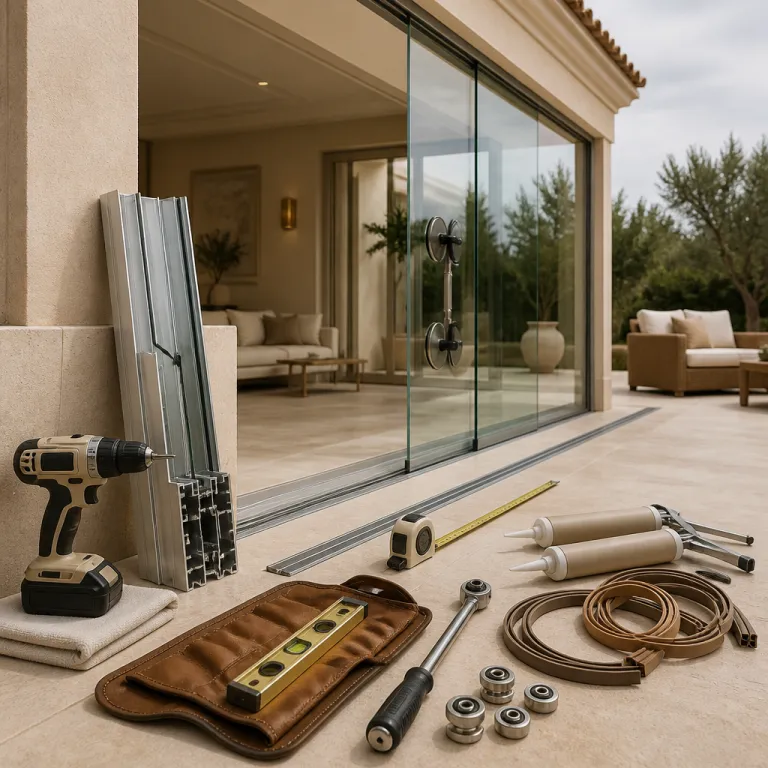
Modern systems use sliding, folding, and pivoting glass walls that can stack into pockets or disappear behind stone columns, leaving corners completely open to outdoor living terraces. Some luxury villas now feature corner less openings where two glass walls meet without a visible post, so when both panels slide away the living room becomes an open pavilion with floor ceiling continuity between interiors and outdoor spaces. Leading systems from brands such as Schüco, Sky‑Frame, and Vitrocsa typically offer double or triple glazing with U‑values in the region of 1.0–1.5 W/m²K and acoustic ratings up to 40–45 dB, while motorized operation, soft close mechanisms, and weather seals mean that these glass walls can be closed quickly when wind rises, yet still deliver excellent insulation and sound control when the villa returns to a more traditional interior mode.2
Smart technology is increasingly embedded in these systems, especially in Mediterranean and coastal villas where weather can change quickly. Automated sensors can close glass walls before rain hits the terrace, protecting the villa interior and any alfresco dining setup without requiring guests to rush back from the pool, and this is particularly valuable for families juggling children and luggage. When you evaluate listings for a Côte d’Azur property, for example, look for descriptions or photography that show multi panel systems and covered terraces; our detailed guide to the Côte d’Azur villa season explains how the best new villas in that region now treat the terrace as a climate controlled extension of the living room.
Climate, covered terraces, and the villa as a family habitat
Climate dictates how indoor outdoor luxury villa design is executed, and families should read listings through that lens. In Mediterranean regions, architecture tends to favor wide open terraces with minimal shading, because breezes and dry air make open outdoor living comfortable for much of the year, while interiors rely on cross ventilation and glass walls that slide fully aside. Tropical villas, by contrast, often use deeper covered terraces and double height outdoor rooms to manage intense sun and rain, so the transition between indoor space and outdoor spaces becomes a shaded gallery rather than a single threshold.
Desert and high heat destinations require a more calibrated approach to indoor outdoor space, where glass, shading, and smart technology work together to protect the villa interior from extreme temperatures. Here, the best villa design ideas use overhangs, screens, and insulated glass walls to allow natural light and views while keeping the living room cool, then open selectively in the evening when temperatures drop. Families booking long term stays in these climates should look for continuous flooring from interiors to terraces, ceiling fans in covered outdoor spaces, and clear evidence that the architecture has been designed for both open and closed modes rather than just dramatic photography.
For parents, the covered terrace often becomes the most important room in the entire villa, because it anchors outdoor living while keeping children within sight lines from the main living room. A well designed terrace lets adults enjoy alfresco dining and relaxed indoor outdoor evenings while kids move between pool, garden, and interior spaces without constant door management, and this is where floor ceiling openings and glass balustrades matter more than decorative styling. When we highlight the villas worth returning to in our guide to repeat worthy luxury villas, the common thread is always how naturally families can flow between indoor and outdoor rooms without friction.
How retractable glass changes the feel of every room
Retractable glass does more than open a wall; it rewrites how a villa feels hour by hour. When glass walls slide away, the living room stops being a closed interior and becomes part of a larger landscape, which changes how you use furniture, lighting, and even sound within the space. Natural light floods deeper into the villa interior, and the psychological boundary between indoor space and outdoor spaces softens, making the entire luxury villa feel larger and more relaxed.
Architects now design double height living rooms with floor ceiling glass on two sides, so that when the panels open you experience a vertical volume of air that feels closer to a pavilion than a conventional room. This kind of modern luxury architecture relies on structural engineering to carry loads away from corners, allowing glass walls to meet in seemingly weightless junctions that disappear when opened, and the result is a seamless indoor outdoor experience that photographs beautifully but feels even more compelling in person. For families, this openness can be both liberating and demanding, because you gain extraordinary views and outdoor living potential while also needing clear rules about pool access and nighttime security.
Interior design must respond to this flexibility, which is why the best luxury villas use materials and palettes that work equally well indoors and outdoors. Continuous stone or timber flooring from living room to terrace, similar fabrics on interior sofas and outdoor lounges, and carefully aligned ceiling heights all help create a unified space that reads as one environment when glass walls are open, yet still feels intimate when closed. Our coverage of a Milos property built from local stone on this detailed villa architecture review shows how thoughtful use of natural materials can make indoor outdoor transitions feel effortless rather than theatrical.
Reading listing photos like an architect of indoor outdoor space
When you scroll through a premium booking website, you are effectively performing a quick architectural review of each villa. To judge indoor outdoor luxury villa design from photos alone, start by tracing how the main living room connects to terraces, pools, and gardens, and look for at least one image that shows glass walls partially or fully open to prove that the system is more than a fixed window. Pay attention to thresholds; a single step down or a change in floor material can break the seamless indoor outdoor flow that makes a luxury villa feel genuinely expansive.
Next, study how natural light moves through the interiors across different photos, because this reveals orientation and glazing strategy. If you see strong light in the morning on one side of the villa and warm evening light on another, the architecture probably uses multiple outdoor spaces to give you options throughout the day, which is ideal for families with children who need shade at some hours and open sun at others. Look for design ideas such as covered alfresco dining zones adjacent to the kitchen, outdoor living lounges that mirror the interior layout, and double height spaces where upper level galleries overlook both indoor and outdoor rooms.
Sound and privacy are harder to read from images, but there are clues. Deep covered terraces, solid side walls framing glass openings, and thoughtful placement of outdoor spaces away from neighboring villas all suggest that the architect considered acoustic comfort when the villa is in fully open mode, which matters if you plan long term stays or travel with young children who nap during the day. When in doubt, ask the property manager specific questions about how the glass walls operate, whether smart technology controls shading and closure, and how the villa interior feels when everything is closed on a windy night versus open on a calm morning.
Quick photo checklist for renters
- At least one photo with glass walls visibly open, not just reflective glazing
- Continuous floor finish from living room to terrace with minimal steps
- Covered outdoor dining directly linked to the kitchen or main living room
- Clear sight lines from interior seating to pool and children’s play areas
- Side walls, screens, or planting that provide privacy from neighboring villas
Why families value indoor outdoor villas differently than couples
Couples often approach indoor outdoor luxury villa design as a question of romance and spectacle, while families treat it as a question of daily living. For parents, the priority is usually a clear visual connection between the main interior living room and all primary outdoor spaces, so that children can move between pool, lawn, and shaded terrace while remaining within a single supervised field of view. This is where glass walls, open corners, and continuous flooring do more than create a design statement; they create a safer, calmer rhythm of living.
Families booking long term stays should look for villas where indoor and outdoor living zones are layered rather than scattered, because this makes it easier to manage different ages and energy levels. An ideal layout might place a covered alfresco dining terrace directly off the kitchen, an outdoor living lounge a few steps beyond, and the pool just beyond that, with the entire sequence visible from the interior design focal point of the living room, and this arrangement allows adults to cook, work, and relax while still feeling connected to children’s play. Ideas modern travelers appreciate include double height spaces where an upper level family room overlooks both the main living room and the terrace, giving teenagers their own interior space without losing the sense of shared villa life.
There is also a long term well being dimension to this kind of architecture, especially for families who return to the same luxury villas year after year. Growing children remember the feel of moving barefoot from bedroom to terrace at sunrise, the way natural light shifts across the villa interior during breakfast, and the ritual of sliding open glass walls to start the day, and these sensory memories often matter more than any single amenity. As one industry FAQ from a leading glazing manufacturer puts it plainly, “They enhance natural light, provide flexible space usage, and improve indoor-outdoor connectivity.”
Key figures shaping retractable glass and indoor outdoor villas
- Industry reports from manufacturers such as NanaWall and Schüco describe triple digit percentage growth in retractable glass wall installations between the early and later phases of their adoption, reflecting how quickly indoor outdoor living has become standard in high end villas.1
- Global architectural surveys indicate that a majority of new luxury villas now specify full height glass openings in at least one primary living space, confirming that disappearing walls are no longer a niche feature.3
- Manufacturers report that modern retractable glass systems can achieve insulation values around 1.0–1.5 W/m²K and acoustic reductions of 40 dB or more, which means families can enjoy open architecture without sacrificing energy efficiency or quiet when walls are closed.2
- Client feedback collected by leading villa rental agencies consistently ranks seamless indoor outdoor flow among the top three decision factors for premium bookings, alongside pool quality and location.4
FAQ about retractable glass and indoor outdoor luxury villa design
What are the benefits of retractable glass walls in a villa ?
Retractable glass walls allow a luxury villa to shift instantly between enclosed comfort and open air living, which is ideal for families balancing sun, shade, and safety. They enhance natural light, provide flexible space usage, and improve indoor-outdoor connectivity, so the same living room can function as a quiet interior retreat or an extension of the terrace. For travelers, this means more ways to use every square metre of the property throughout the day.
Are retractable glass walls energy efficient for long term stays ?
Modern systems are designed with insulated glass, thermal breaks, and advanced seals, so they can be surprisingly energy efficient when closed. Manufacturers confirm that current retractable glass walls offer improved insulation and energy efficiency compared with earlier generations, which matters if you plan a long term family stay in a villa with strong sun exposure. The key is to look for recent installations and ask property managers about glazing specifications rather than assuming all glass performs the same.
How much do retractable glass walls add to the cost of a villa ?
The cost of retractable glass walls varies based on size, configuration, and customization, and this investment is one reason why some luxury villas command higher nightly rates. Industry guidance notes that costs vary based on size, materials, and customization, but owners often recoup this through higher occupancy and premium pricing because guests value seamless indoor outdoor living so highly. For renters, the question is less about construction cost and more about whether the design quality justifies the rate you are paying.
What should I check in listing photos to assess indoor outdoor quality ?
Look for clear images showing glass walls partially or fully open, continuous flooring between interior and exterior, and covered terraces positioned directly off the main living room. Check how many outdoor spaces connect directly to the core of the villa, because scattered terraces can feel less usable for families with children. If photos are ambiguous, ask for a floor plan or short video walkthrough to understand how indoor and outdoor rooms relate in daily living.
Are retractable glass walls suitable for families with young children ?
They can be excellent for families when combined with thoughtful safety measures such as lockable panels, pool fencing, and clear sight lines from the main living areas. The advantage is that parents can supervise outdoor play from inside the villa while still enjoying natural light and views, especially when glass walls are closed but transparent. Before booking, confirm how the system locks, whether there are alarms or sensors, and how the villa manages pool access when the walls are open.
1 Based on growth figures cited in manufacturer marketing literature and trade press summaries for retractable glass systems between approximately 2000–2015.
2 Performance ranges compiled from technical datasheets published by leading minimal-frame and sliding glass manufacturers.
3 Aggregated from global luxury residential design surveys and architectural practice reports on glazing trends.
4 Drawn from internal booking data and post-stay surveys reported by premium villa rental agencies.